← Back to the visitor's guide
Temple and abbot

Jaeunsa and Venerable Joju Sunim

On 29 August 2026, the abbot of Jaeunsa received an award from the President of Uzbekistan. This page is about him, and about how the only active Buddhist temple in Central Asia was founded, burned down, and began again.

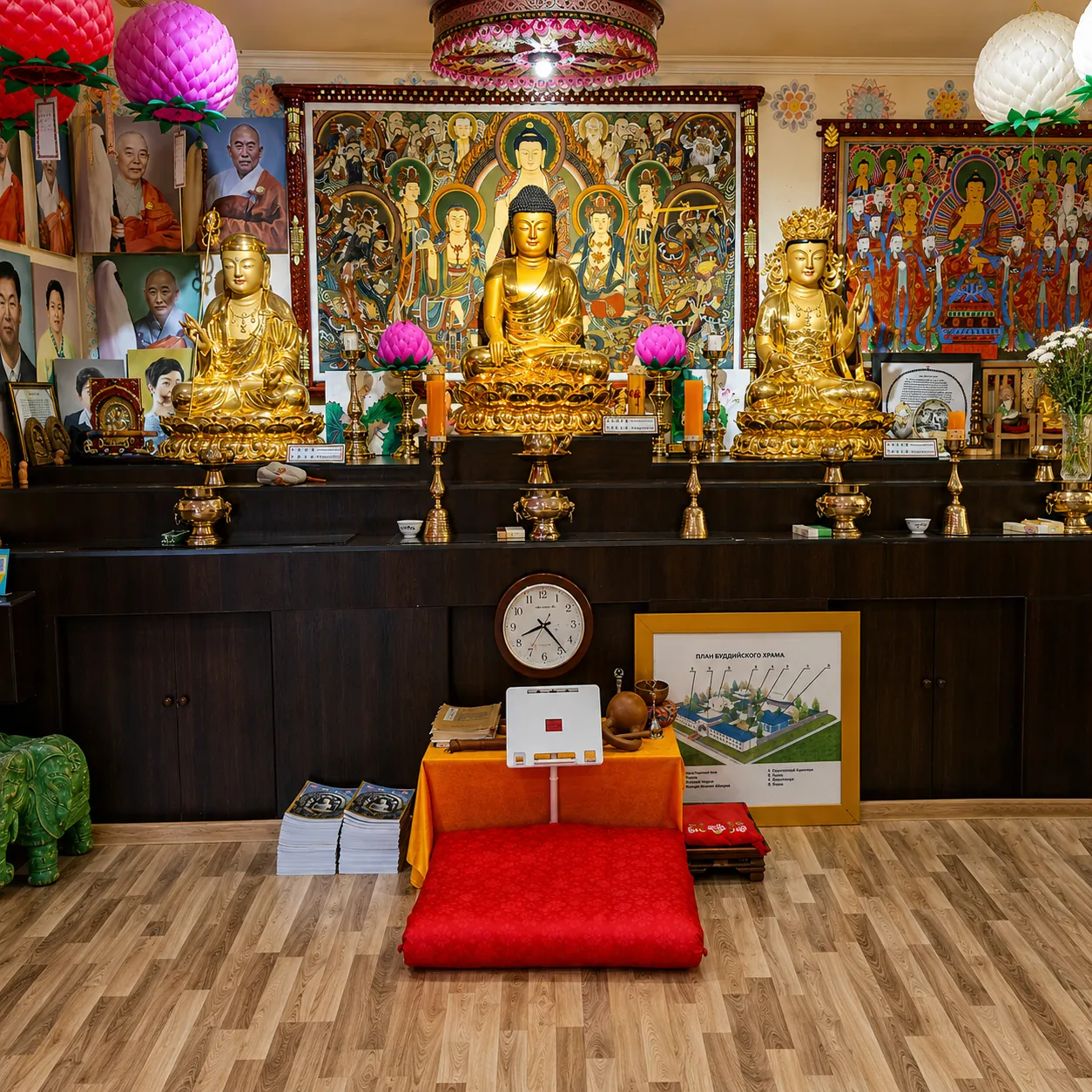
The altar at Jaeunsa: a Buddha statue, candles and offerings
The main altar · photo: Jaeunsa Temple
The award

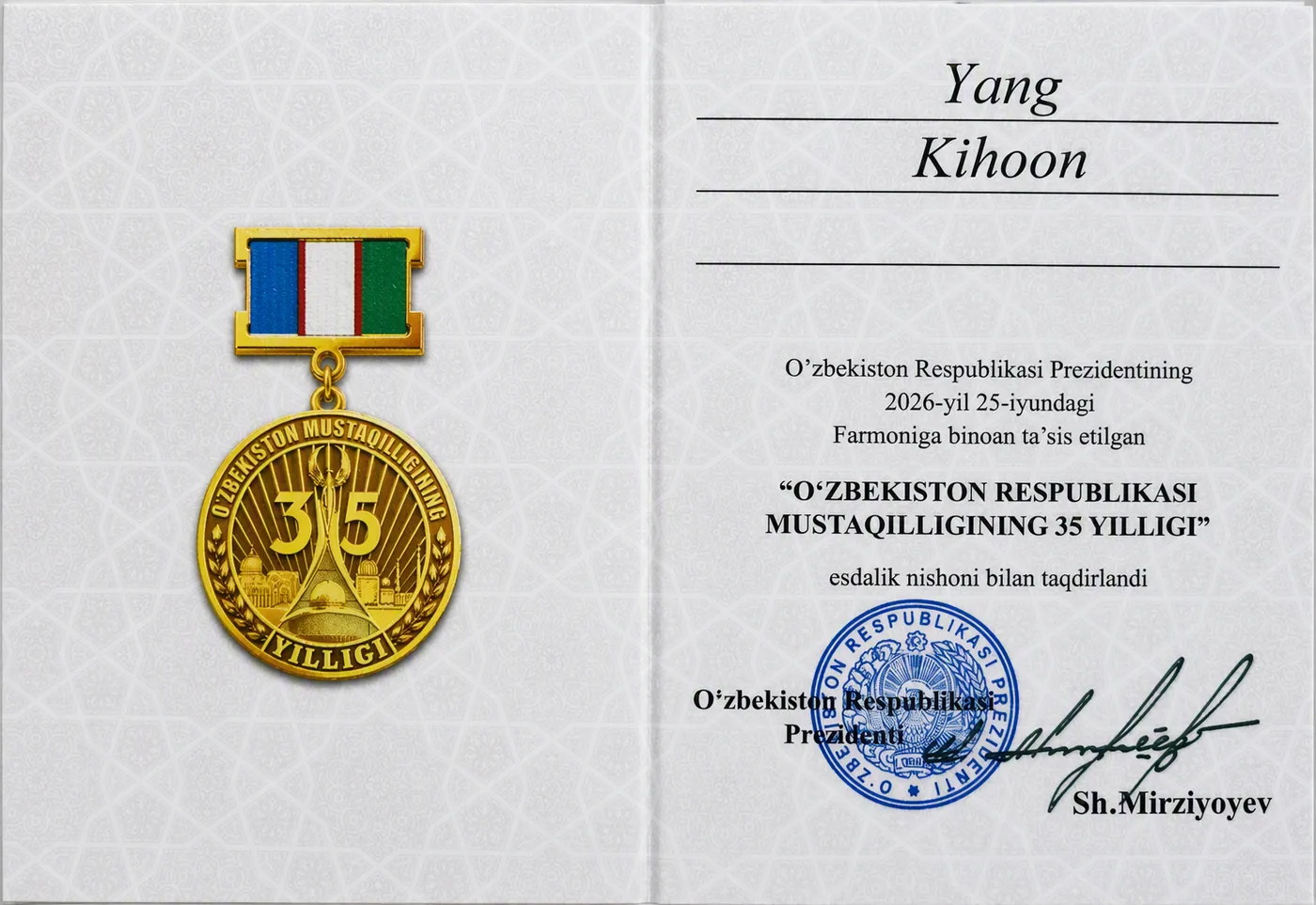
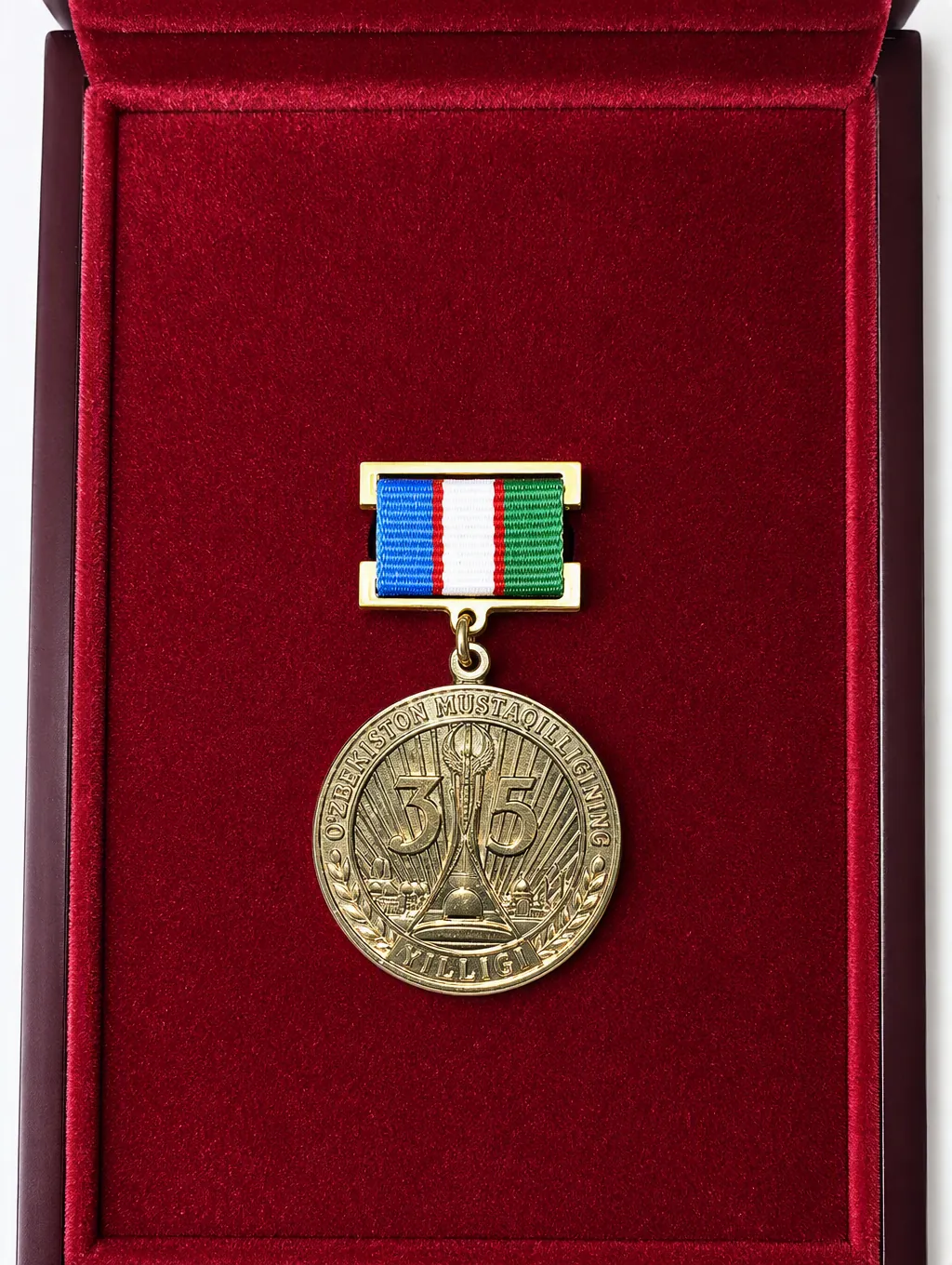
A medal for 35 years of independence

On 29 August, Venerable Joju Sunim (Yang Ki-hoon), abbot of Jaeunsa and head of the Buddhist Association of Uzbekistan, received an award from President Shavkat Mirziyoyev of the Republic of Uzbekistan.

The award was created to mark the 35th anniversary of Uzbekistan's independence, and honours service and contribution to the country's development and democratisation in the years since.

The 35th anniversary of independence medal in its presentation case
The commemorative medal “35 Years of the Independence of the Republic of Uzbekistan”
The certificate of award issued to Yang Ki-hoon
The certificate of award, signed by the President
The journey

From Haeinsa to Tashkent

In 1990 the future abbot was ordained as a monk at Haeinsa monastery, and the very next year, in 1991, he was sent to the Soviet Union — arriving in time to witness its collapse and the independence of its republics.

In 1992 he became the first head of external relations at the Association of Korean Culture and one of the founders of a movement to revive Korean culture. That same year he organised the first Dano festival ever held in the Soviet Union, explaining its origins to those who came. Then came the weddings, the funerals, the sixtieth birthdays — the Korean rites he helped to preserve and pass on, and a book on those traditions published through the Association.

Seeing the state of medicine after the Soviet collapse, he trained in traditional Korean medicine and acupuncture and spent years treating patients free of charge.

He arrived in a country that would cease to exist within months — and stayed on in the one that took its place.1991 — 2026
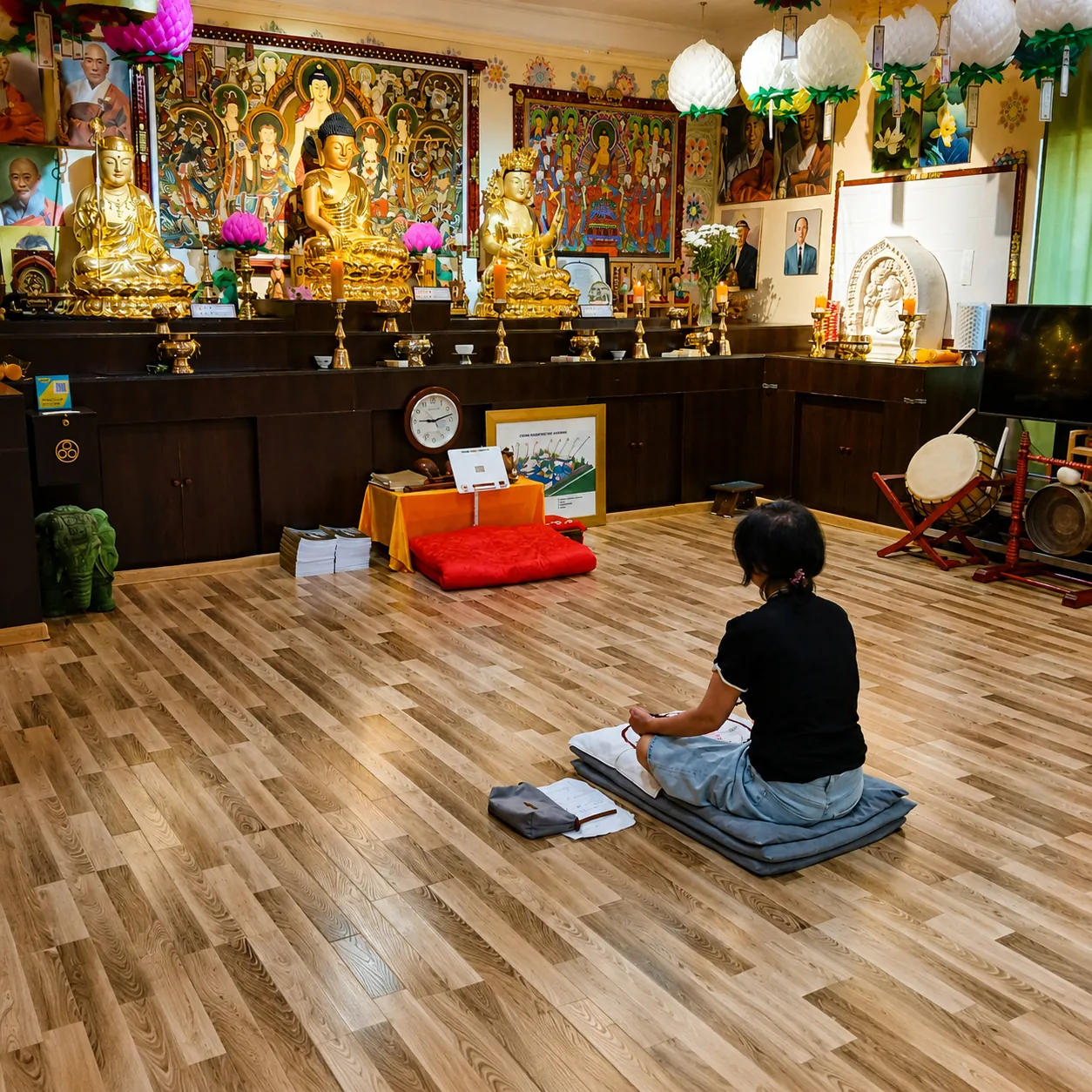
The meditation hall at Jaeunsa: cushions on the floor, wooden walls, the altar at the far end The meditation hall · photo: Jaeunsa Temple
Research

Buddhism reached China and Korea from here

Joju Sunim established that the lands of present-day Uzbekistan are the historical territory of the Great Yuezhi (Dayuezhi), from which Buddhism spread to ancient China and Korea.

He traced the pilgrim routes of the Chinese monk Xuanzang and the Korean monk Hyecho, and studied in particular detail the campaigns and surviving monuments associated with General Go Seon-ji (Gao Xianzhi), a man of Goguryeo descent.

Feeling that the scholarly foundation for this work was too thin, he completed a master's degree and a doctoral programme at Dongguk University, and in Tashkent took a master's and a doctorate in archaeology at Hamza University, taking part in the excavation and conservation of Buddhist sites.

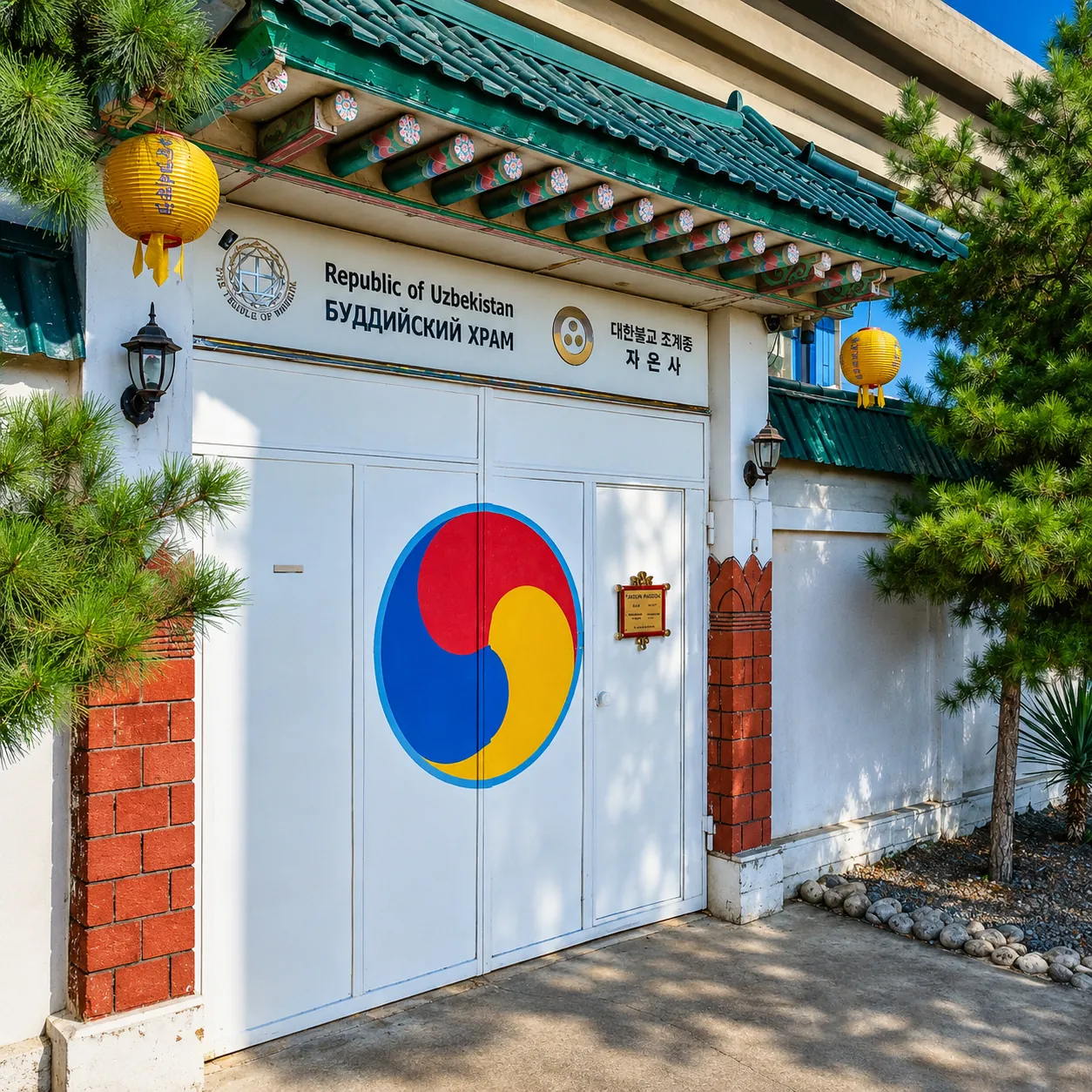
The gate of Jaeunsa, the only Buddhist temple in Central Asia Jaeunsa Temple, Tashkent · photo: Jaeunsa Temple
The temple's history

The temple that began twice

Jaeunsa came into being because Venerable Seongcheol of Baengnyeonam hermitage, at Haeinsa monastery, gave the Buddha statues and blessed its founding.

In 1992 the temple was formally registered as a religious organisation and placed under the care of Haeinsa. In those years Joju Sunim himself was working mainly in Russia and Ukraine.

After Seongcheol's passing he was left alone to carry on Buddhist work in Uzbekistan, Kazakhstan and Russia. In 1997 the Tashkent temple, then administered by Haeinsa, burned to the ground in an arson attack made possible by inadequate oversight, and its registration as a religious organisation was annulled.

At the request of local Buddhists and of Haeinsa, he took the temple back and rebuilt it. Overseas mission held little interest for the Korean orders, and local people knew almost nothing of Buddhism — the money to keep the temple running had to be earned by hand, down to shuttle trading.

1997: the temple burned to the ground and its registration was annulled. The community asked the abbot to return — and everything began again.Impermanence, and not as a metaphor

Since 2016, with the support of Kazakhstan's Buddhists, a traditional Korean medicine clinic has operated in Almaty: what began as free treatment became the means of supporting the temple.

Working with tour companies, the temple introduces non-Buddhists to Buddhism and its culture, and to the history and traditions of Buddhism in Uzbekistan. On the recommendation of the Committee on Religious Affairs under the Cabinet of Ministers, Joju Sunim also lectures on Buddhism to students at the Islamic university — in the interest of mutual understanding, dialogue and peaceful coexistence between faiths.
Public life

A Korean park, a cultural centre, and a congress of religions

In years when the Soviet attitude to religion was still very much alive, he worked patiently for understanding and common ground around traditional Korean culture: supporting the Korean theatre and helping with its productions, leading funeral rites, weddings and birthday celebrations.

He built working relationships with the local UNESCO bodies and the women's committee, and gives regular support to veterans' associations and children's homes. Since 2015 he has served by official invitation on the Committee on Religious Affairs under the Cabinet of Ministers as the representative of Buddhism — and maintains good relations with every faith community in the country.

To defend the rights of the Koryo-saram, the Korean community of Uzbekistan, he was a founder of the Association of Koreans in Uzbekistan, sat on its first board, and helped to publish a Korean-language newspaper.

Seeing that Korean weddings were being held in a Japanese park, he petitioned the Korean presidential office and the National Assembly and negotiated with Seoul's parks authority. Turned down, he made the case for a Korean Park to Korea's ambassador in Uzbekistan and worked alongside him to see it built. At the suggestion of Sergey Pak, chairman of the Association of Korean Culture, he petitioned for a Korean Cultural Centre as well. In the end Tashkent got both the park and the cultural centre.

With the chairman of the Council for Peaceful Unification in Central Asia, he provided medical and social care at the Korean retirement home in Turkestan.

From 2006 to 2020 he represented the Jogye Order at the Congress of Leaders of World and Traditional Religions in Kazakhstan, and in 2006 he was chosen to head the Buddhist delegations. For this work he was twice honoured with awards from the President of Kazakhstan.

Venerable Joju Sunim at the award ceremony in Astana
The Congress of Leaders of World and Traditional Religions, Astana
The Kazakh “Astana” medal in its case
The Kazakh award
What comes next

Buddhist ground near Termez

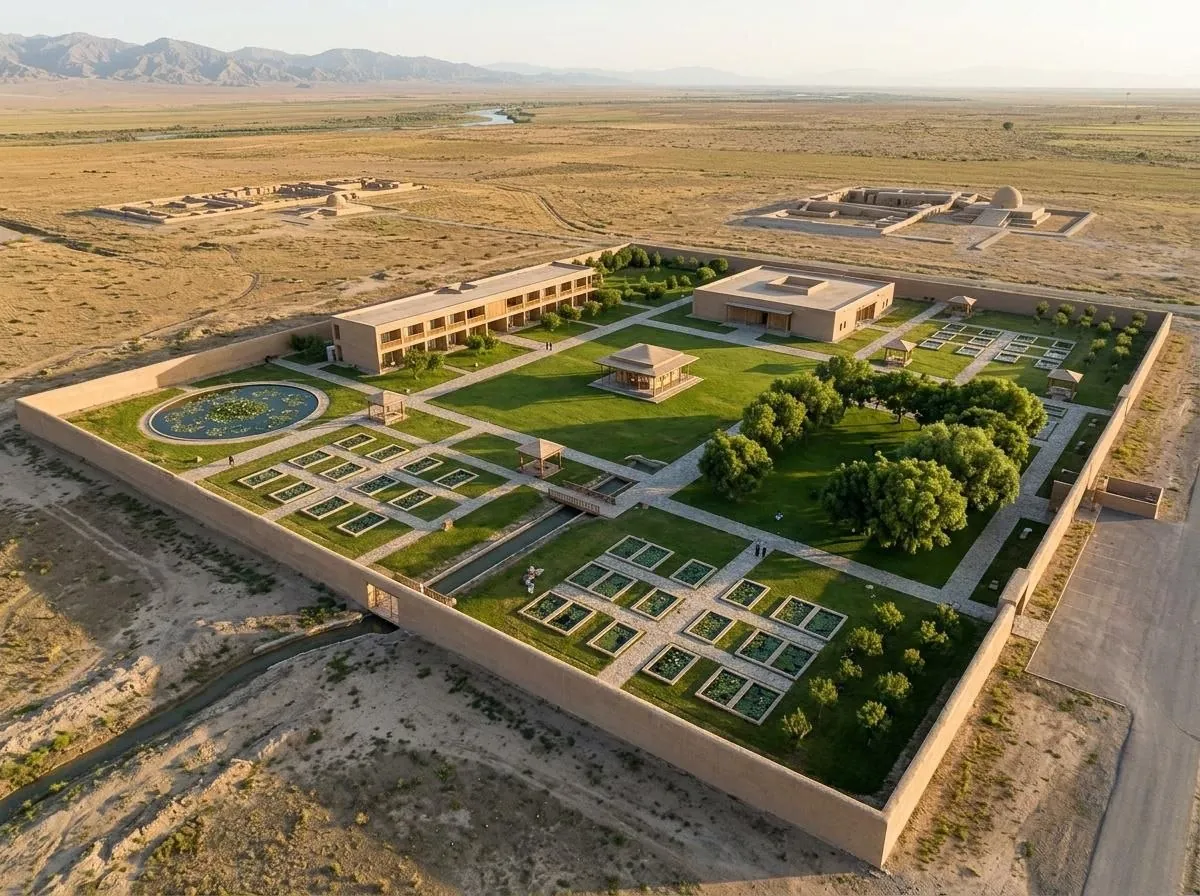
Joju Sunim is now in talks with the government of Uzbekistan to obtain some thirty hectares beside the Buddhist monuments near Termez — the ground that Hyecho and Xuanzang once crossed.

The idea is to continue excavating the sites, restore part of them, build a museum, and make this a Buddhist centre that Buddhists from around the world can come to. Traditional food and practice, breathing exercises, broad fields of lotus and water dropwort (minari), and alongside them a wellness centre where moxibustion and acupuncture help with diabetes, hypertension and their attendant complications.

Aerial view of the complex, with its garden and ponds beside the archaeological sites
The proposed Buddhist centre near Termez, Surkhandarya

Come and see

The address, service times and etiquette for visitors are all on the main page.